- +91-7974292029, +91-9993800886, +91-9826030969
- [email protected]
- Mon - Sat 10:00 - 20:00 Hrs

SECRETS OF HEMIS MONASTERY
Where High-Altitude Thrills Meet Mind-Bending Himalayan Culture
Let’s be honest: when most people gear up for Ladakh, they’re thinking about dramatic mountain passes, magnetic hills, and dramatic Instagram shots. But if you want to experience the true soul of the Trans-Himalayas, you’ve got to head where history, high-altitude mysticism, and sheer architectural madness collide: Hemis Monastery.
Tucked away in a silent gorge about 45 km southeast of Leh, Hemis (or Hemis Gompa) isn’t just another monastery on a travel checklist. It is the principal seat of the Drukpa Lineage of Tibetan Buddhism, a massive storehouse of ancient secrets, and arguably the most culturally loaded pitstop you can make on a Ladakhi adventure.
Pack your curious mind and your trekking boots—we’re diving deep into why Hemis is in a league of its own.
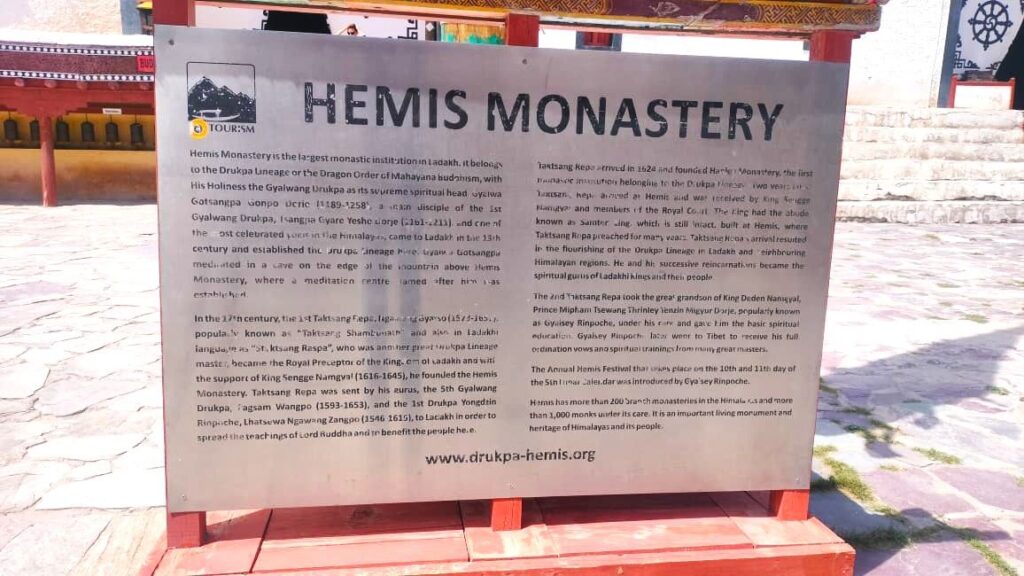
The Ultimate Guide to Hemis Monastery
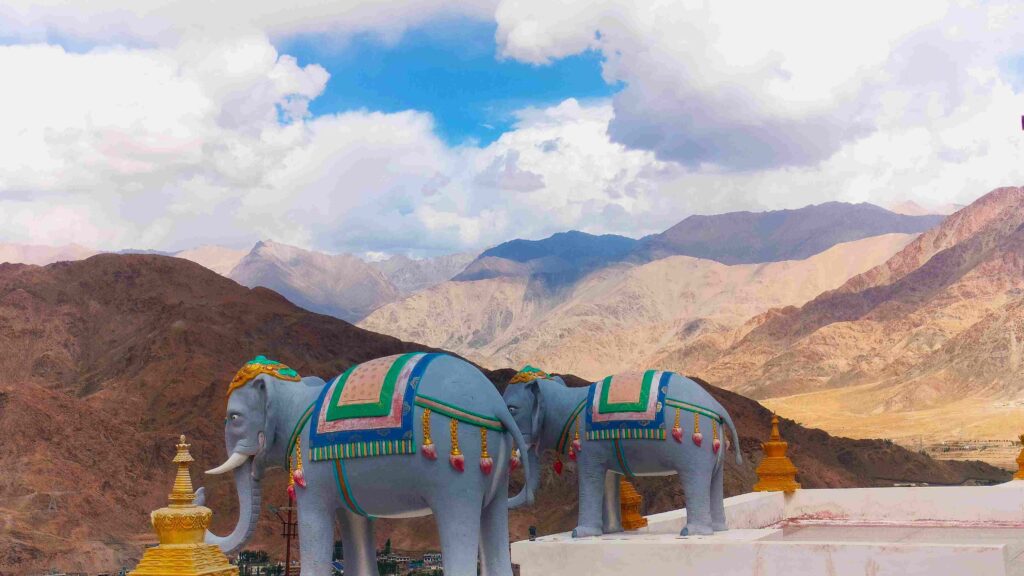
Tucked Away in a Sacred Pocket
Most monasteries in Ladakh like Thiksey or Namgyal Tsemo sit dramatically atop exposed crags, practically shouting “Look at me!” to every passing traveler.
Hemis plays it low-key. It is deliberately built inside a hidden side-valley on the southern bank of the Indus River, framed by the jagged, mineral-rich peaks of Hemis National Park. The story goes that its 17th-century founder, Stagsang Raspa Nawang Gyatso (invited by King Sengge Namgyal), chose this secluded spot so the monastery would be protected from harsh Himalayan winds—and historical invaders.
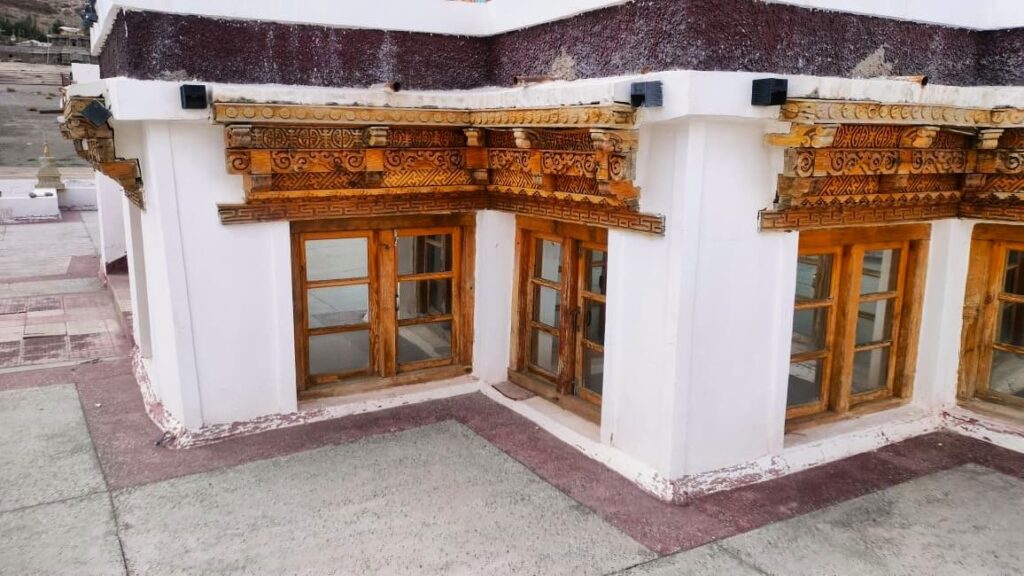
The effect? As you approach, the monastery seems to materialize out of the raw rock face—a massive, tiered maze of whitewashed stone, heavy timber beams, and floating prayer flags.
Guru Padmasambhava at Hemis Monastery: The Tantric Master
You cannot understand Hemis without understanding Guru Padmasambhava (affectionately known in the region as Guru Rinpoche, or the “Precious Master”). In the 8th century, he brought Tantric Vajrayana Buddhism from India across the Himalayas into Tibet. To the locals, Guru Rinpoche wasn’t just a scholar; he was a cosmic force who subdued demonic spirits and turned raw Himalayan energy into spiritual ground.
The Master’s Physical Presence
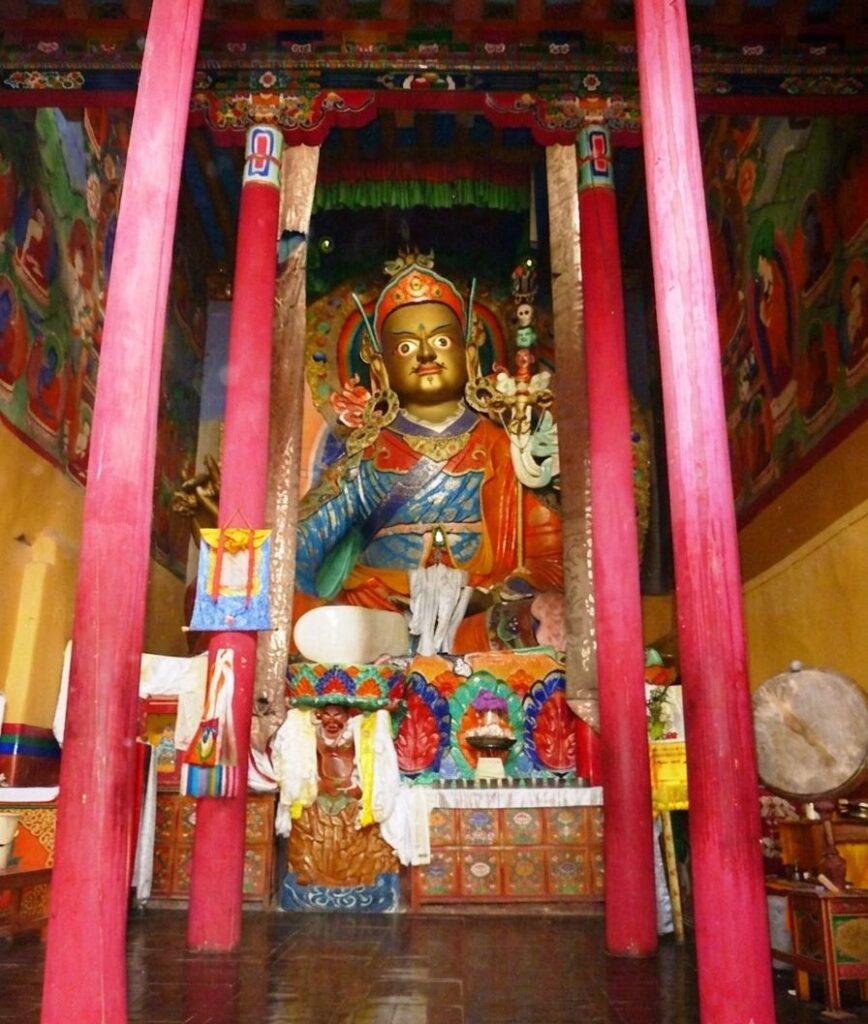
Step inside the Guru Lhakhang (the shrine room dedicated to him) at Hemis, and you’re greeted by an incredible, multi-story statue of Padmasambhava. He isn’t depicted as a gentle, passive sage. His expression is intense—piercing wide eyes, a subtle, knowing smirking expression, and holding symbolic Tantric tools:
- The Vajra (Dorje) in his right hand: Symbolizes the unbreakable force of ultimate reality and spiritual power.
- The Skull Cup (Kapala) with a vase of immortality in his left: Represents absolute wisdom and the transformation of raw human desire into spiritual clarity.
- The Khatvanga Trident resting against his shoulder: Symbolizes his mastery over energy, body, and mind.
The precise hand poses (mudras) used in his depictions across Hemis aren’t decorative—scholars note they are precise psycho-spiritual maps intended to guide practitioners through visualization techniques in Mahayoga Tantra.
Guru Padmasambhava's Iconography
Right Hand: Vajra
Unshakable Reality
Left Hand: Skull Cap
Transformed Wisdom
Trident (Khatvanga)
Mastery Over Mind
Wide-Eyed Expression
Unyielding Awareness
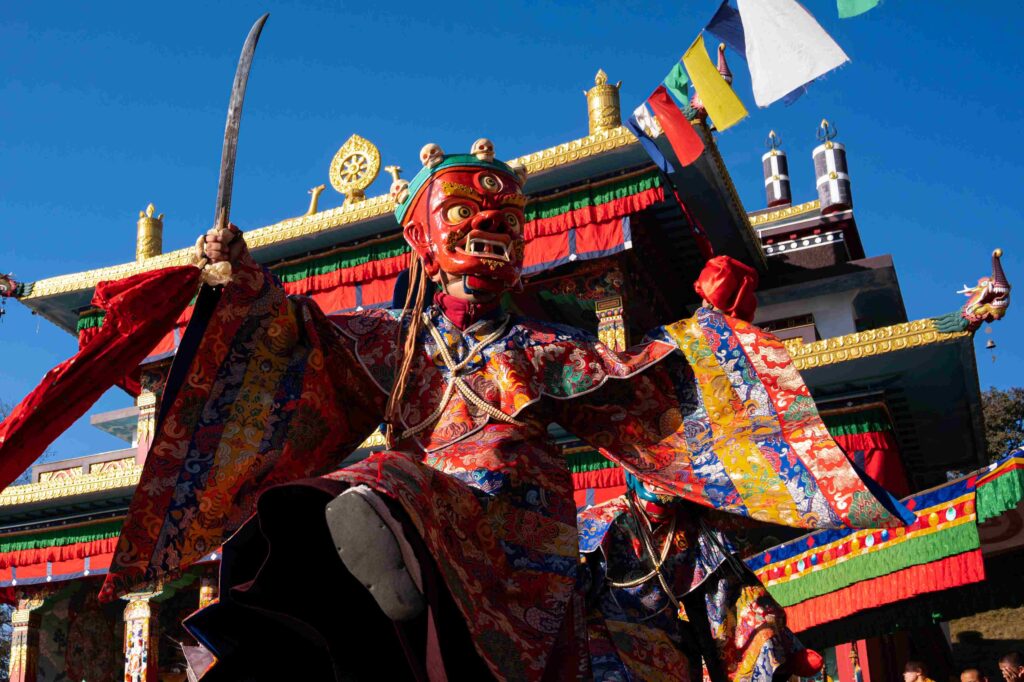
The Hemis Tsechu Festival & Masked Dances
Hemis remains an active center for religious and cultural events. Each summer (typically in June or July), the main courtyard hosts the annual Hemis Tsechu Festival.
Monks wear silk robes and hand-carved masks (Cham) to portray the eight manifestations of Guru Padmasambhava. Accompanied by long brass horns (dungchen) and drums, these sacred dances symbolize the removal of negative energies from the valley.
The Scholarly Twist: The "Lost Years" Mystery
Here’s a fun piece of trivia for history buffs: back in 1894, a Russian journalist named Nicolas Notovitch claimed he found an ancient text in the Hemis library. He alleged it proved Jesus had spent his “lost years” studying Buddhist philosophy in India and Ladakh! While modern historians widely consider this story a fabrication, it speaks to the mysterious aura surrounding Hemis. Its vaults genuinely house thousands of rare ancient manuscripts, priceless mineral-pigment thangkas, and silver-and-gold stupas encrusted with precious stones.
Hemis Monastery: From the eyes of an adventurer
Top things to do around Hemis Monastery
- Explore the Underground Museum: The museum beneath the main courtyard displays centuries-old weapons, ritual masks, historic armor, and 17th-century murals depicting the 84 Mahasiddhas.
- Hike to Gotsang Hermitage: For a short side trip, follow the trail behind the monastery up to Gotsang Hermitage. This 45-minute uphill hike leads to a quiet meditation retreat with views across the Indus Valley.
- Trek Hemis National Park: Hemis serves as a primary access point for multi-day routes across the region, including the popular Markha Valley Trek.
Hemis Monastery: Everything you need to know
Where is Hemis Monastery located, and how far is it from Leh?
Hemis Monastery is located roughly 45 km southeast of Leh, on the southern bank of the Indus River. It sits within a side gorge along the border of Hemis National Park.
What is the best time to visit Hemis Monastery?
The best months to visit are between May and September when mountain routes are open and weather conditions are favorable. Visiting in June or July allows travelers to witness the annual Hemis Tsechu Festival.
Do I need an Inner Line Permit (ILP) to visit Hemis Monastery?
No, domestic and international visitors do not need an Inner Line Permit (ILP) to visit Hemis Monastery itself. However, permits are required if you plan to venture deeper into restricted border zones or specific trails within Hemis National Park.
What are the opening hours and entry fees for Hemis Gompa?
The complex is open daily from 8:00 AM to 1:00 PM and 2:00 PM to 6:00 PM. Entry is ₹50 for Indian nationals and ₹200 for foreign tourists, which includes access to the main monastery areas and museum.
Why is Guru Padmasambhava significant to Hemis Monastery?
Guru Padmasambhava brought Tantric Vajrayana Buddhism to the Himalayan region in the 8th century. Hemis honors his legacy through its central multi-story statue in the Guru Lhakhang, detailed murals, and the annual festival celebrating his birth anniversary.
What happens during the Hemis Tsechu Festival?
Held over two days in the fifth Tibetan lunar month, the festival features sacred Cham (masked dances) performed by monks representing the eight forms of Guru Padmasambhava. Once every 12 years (during the Tibetan Year of the Monkey), a two-story woven silk thangka of Guru Rinpoche is displayed in the courtyard.
How do I travel from Leh to Hemis Monastery?
Travelers can reach Hemis by hiring a private taxi (a 1 to 1.5-hour drive), renting a motorcycle, or taking local buses running from the Leh main bus stand toward Kharu.
Is photography permitted inside Hemis Monastery?
Photography is permitted in outdoor courtyards and balcony spaces. However, photography and flash are strictly prohibited inside the main prayer halls (dukhangs) and underground museum spaces to protect delicate historic artwork.
Are there trekking trails near Hemis Monastery?
Yes. Aside from the 45-minute hike up to Gotsang Hermitage, Hemis serves as a major trailhead for high-altitude routes through Hemis National Park, including the Markha Valley circuit.
How can I plan a high-altitude trip to Ladakh with Junoon Adventure?
At Junoon Adventure, we organize customized travel itineraries, high-altitude trekking expeditions, and cultural tours across Ladakh. We assist with acclimatization planning, route logistics, and experienced local guides for a seamless Himalayan experience.
Plan Your High-Altitude Culture Fix
Whether you are stopping by during a broader Ladakh travel itinerary or using it as a starting point for a trek into Hemis National Park, Hemis Monastery offers a look into the history and living culture of the Trans-Himalayas. At Junoon Adventure, we believe every mountain journey should leave you with epic stories, deep insights, and a bit of dirt on your boots. Keep exploring, respect the local culture, and let the mountains work their magic!
About the author
Rupanjali Singh
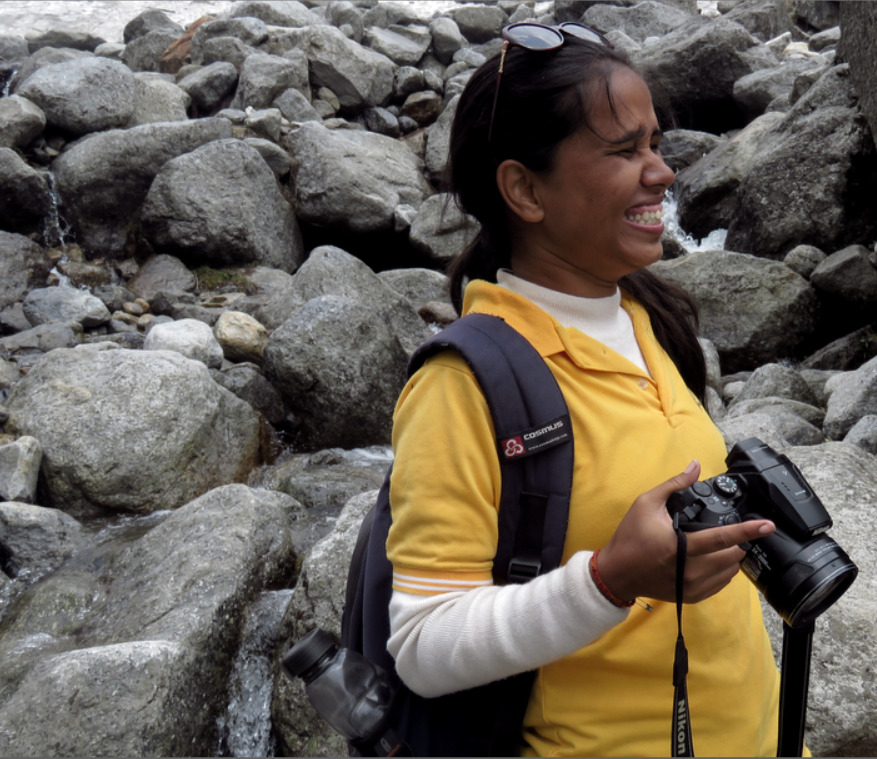
Meet Rupanjali Singh, lovingly known as Ruby Zee—Junoon’s core team dynamo and the heartbeat of our adventures. With an infectious laugh that can light up any campsite, she’s our in‑house prankster, fun‑maker, and laughter track rolled into one. Just the slightest nudge and Ruby will have the whole team in stitches, leaving everyone wondering, “What was so funny?”
Since 2015, she’s been an active force in the adventure industry, mastering the art of travel, event management, and marketing while adding her signature tadka of creativity to everything she touches. Whether she’s orchestrating treks, designing experiences, or keeping spirits high on the trail, Ruby embodies the will to live and conquer the world. Daring, chirpy, and endlessly imaginative, she ensures every Junoon journey is not just an adventure, but a story worth telling.